
A tablet exposed to moisture for a few hours can lose some of its active ingredient. A syrup poorly protected from light may degrade even before its expiration date. The packaging of a medication is not just a simple container: it is the last barrier between the active molecule and external aggressions that threaten its effectiveness.
Serialization and traceability: what packaging must integrate from its design
Have you ever noticed a small square code, similar to a QR code, on your medicine box? This 2D DataMatrix code has become a regulatory requirement in Europe since the implementation of the Falsified Medicines Directive (FMD). Each box bears a unique identifier, verified at every stage of the distribution chain.
This anti-counterfeiting system modifies the very design of the packaging. Manufacturers must provide printable surfaces compatible with the artificial vision of control lines. The arrangement of the carton panels, the choice of inks, the placement of legal mentions: everything is rethought so that the code remains readable after printing, storage, and transport.
For combined products that associate a medication with a medical device (injector pen, pre-filled syringe, transdermal patch), the European Medical Devices Regulation (MDR) imposes an additional identifier called UDI. The packaging must then bear both the FMD serialization and the UDI, complicating the allocation of available space on the carton. Understanding the methods of packaging medications therefore requires integrating these regulatory constraints from the design stage.
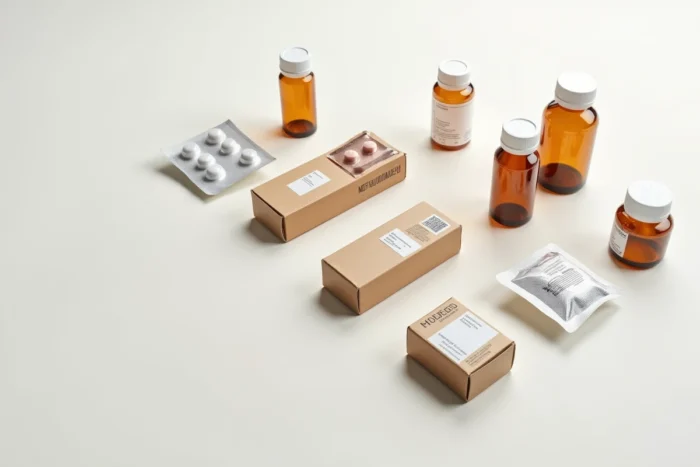
Primary packaging of medications: the choice of material changes everything
Primary packaging is the layer in direct contact with the medication. It determines the stability of the product throughout its shelf life. And the options are far from equivalent.
PVC blister vs. cold-formed aluminum blister
The PVC blister remains the most common format for tablets and capsules. It offers a reasonable barrier against moisture at a low cost. In contrast, for active ingredients sensitive to moisture (we’re talking about hygroscopic molecules), the cold-formed aluminum blister provides maximum barrier. Aluminum blocks nearly all water vapor and light.
The choice between these two options directly depends on the sensitivity of the active ingredient. A stable medication tolerates standard PVC. A fragile molecule requires aluminum, even if the production cost increases significantly.
Bottles, ampoules, and pre-filled syringes
Liquid forms (syrups, injectable solutions) use glass or plastic bottles of pharmaceutical grade. Borosilicate glass remains the reference for injectables, as it limits interactions between the container and the formulation. Sealed glass ampoules guarantee sterility until opened.
Each material in contact with the medication must meet USP and European Pharmacopoeia (Ph. Eur.) standards regarding extractable and leachable substances. In other words, the container must not release anything to the medication nor take anything away from it.
Packaging and adherence: when packaging helps the patient follow their treatment
Well-designed packaging not only protects the medication. It also facilitates correct intake, which has a direct impact on the effectiveness of the treatment.
Do you take three different medications morning and evening? Traditional formats (one box per medication) complicate daily tracking. It is to address this issue that adherence-focused packaging formats are developing, particularly for chronic diseases and poly-medicated patients.
- Calendar blisters organize tablets by day of the week, sometimes by time of day, to avoid forgetfulness and double dosing.
- Unit dose pouches group all medications for a single intake in one pouch, with the time and date printed.
- Multi-dose packs combine several treatments in a single sequenced package, reducing the number of boxes to manage.
These formats do not change the molecule, but they reduce intake errors among poly-medicated patients. For a laboratory, the choice of secondary packaging directly influences adherence to the prescribed treatment.
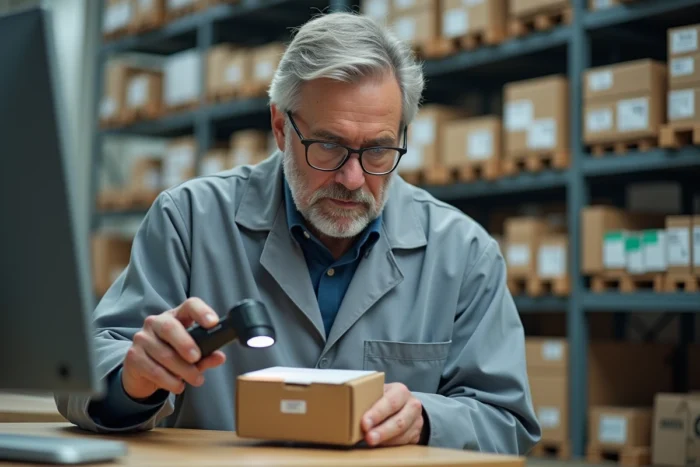
Secondary and tertiary packaging: protection, information, and logistics
The carton that surrounds the blister or bottle constitutes the secondary packaging. It serves two distinct functions.
The first is informative. The box carries mandatory mentions: name of the medication, dosage, route of administration, lot number, expiration date, serialization code. The readability of this information is regulated by health authorities.
The second is protective. The carton absorbs shocks during transport and protects the primary packaging from light. A carton that is too thin or poorly sized can compromise the integrity of the blister it contains.
Tertiary packaging (grouping boxes, shrink-wrapped pallets) concerns logistics in bulk volume. At this scale, the constraints focus on stacking resistance, maintaining the cold chain for temperature-sensitive products, and compatibility with automated reading systems in warehouses.
- Primary packaging protects the molecule from moisture, light, and contamination.
- Secondary packaging ensures regulatory information and mechanical protection.
- Tertiary packaging organizes transport and distribution on a large scale.
Each layer of packaging meets distinct regulatory requirements. A defect in any of them can lead to a recall, even if the medication itself is compliant.
Pharmaceutical packaging evolves under the simultaneous pressure of regulation (serialization, UDI, compatibility standards) and user expectations (adherence, readability, practicality). Choosing packaging means balancing the protection of the active ingredient, production costs, and the patient’s ability to correctly use their treatment. A poorly packaged medication is a medication that does not fulfill its mission.