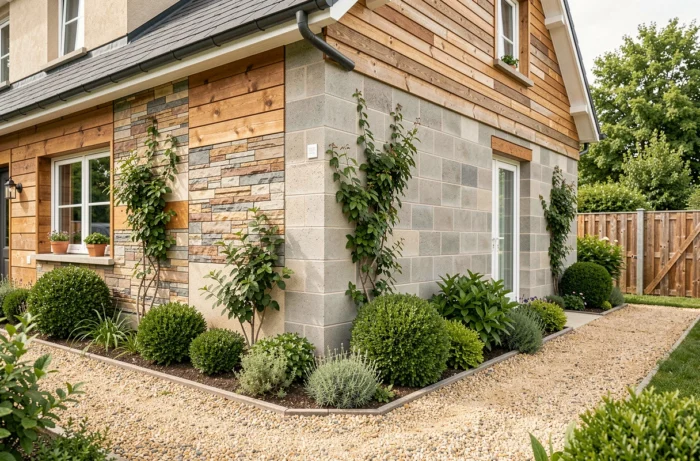
A raw concrete block wall in a garden or on a terrace is solid but rarely flattering. The uniform gray of the concrete block draws the eye for all the wrong reasons. Dressing an exterior concrete block wall can transform this dull surface into a true decorative element while protecting the masonry from the elements. Here are ten concrete techniques, from the simplest to the most technical, to achieve this.
1. Sprayed monocouche plaster: the quick and protective base
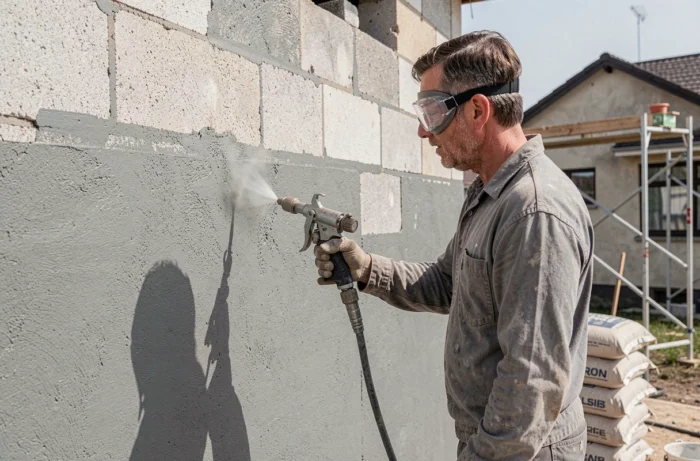
Monocouche plaster remains the most common solution to hide concrete blocks. Applied by machine or by hand, it covers joints and irregularities in a single pass. The result gives a smooth or textured appearance depending on the chosen finish.
Beyond aesthetics, monocouche plaster waterproofs the concrete block and limits water infiltration. Several shades are available on the market, from off-white to stone tones. Expect a day’s work for an average-sized wall, after a good high-pressure cleaning to remove moss and lichens.
2. Wooden cladding with ventilated air gap
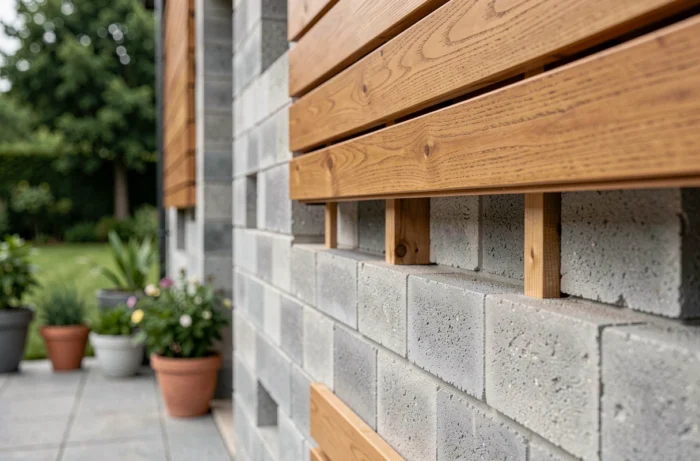
Installing wooden cladding on a concrete block wall radically changes the atmosphere. Wood brings visual warmth and completely masks the concrete block. The boards are fixed to battens screwed into the wall, creating a ventilated air gap between the concrete block and the cladding.
This air gap is not just a detail: it prevents moisture from stagnating and protects the structure. The spacing of the battens must comply with the recommendations of DTU 41.2 to ensure the cladding’s durability over time. If you are looking for tips for dressing an exterior wall, wooden cladding is among the most versatile options.
Note: modifying the exterior appearance of a wall visible from the street requires prior work declaration with your local authority, in accordance with the Urban Planning Code.
3. Natural stone veneer
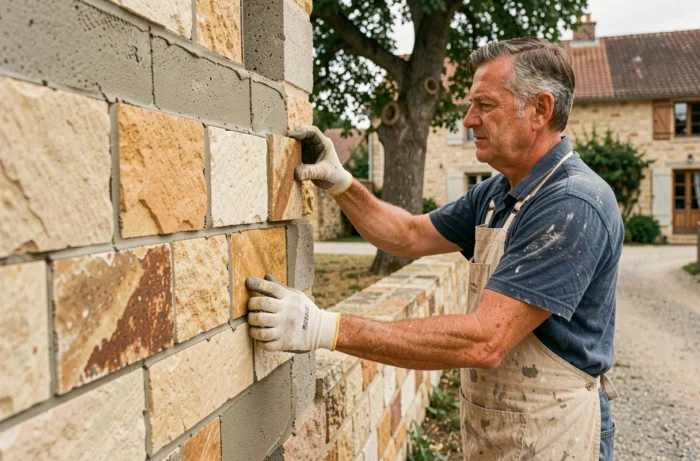
Natural stone veneer tiles are glued directly onto the prepared concrete block. The result mimics a dressed stone wall, with relief and color variations that paint cannot reproduce.
A double gluing, on the wall and on the tile, ensures durable adhesion against frost and temperature variations. It is a more expensive solution than plaster, but the visual result justifies the investment on a wall that is very visible from the terrace or entrance.
4. Microporous exterior paint
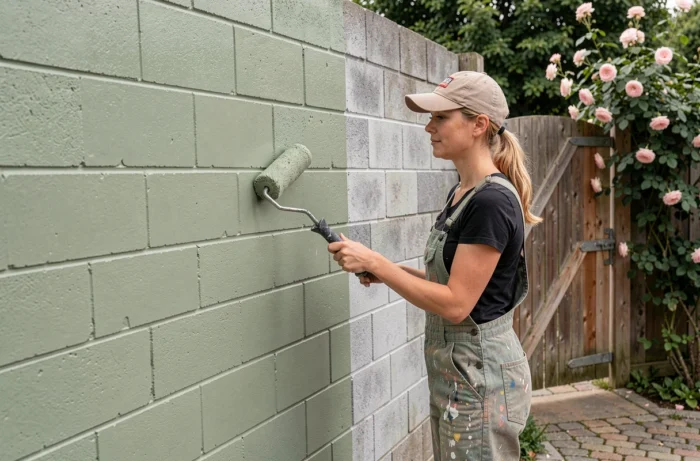
If the budget is tight, exterior paint remains the most accessible way to transform a concrete block wall. Microporous paint allows the substrate to breathe while protecting it. Light colors (white, beige, pearl gray) visually enlarge the space.
One often overlooked point: applying a primer before painting prevents the porous concrete block from absorbing the first coat without effect. Two finishing coats are then sufficient. The lifespan varies depending on exposure, but refreshing every few years keeps it looking new.
5. Plant trellis with climbing plants
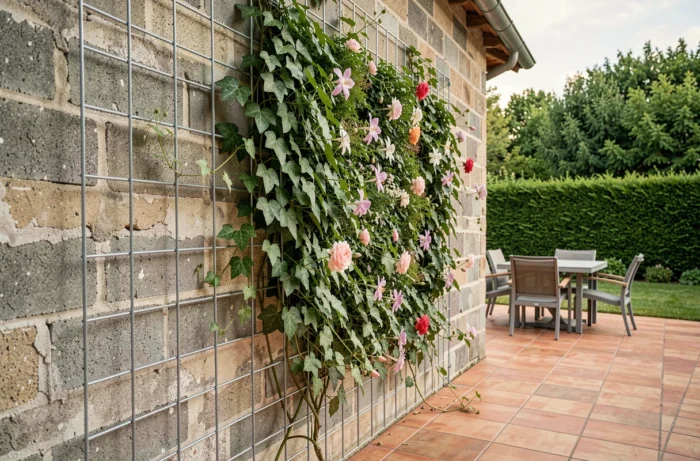
Fixing a wooden or metal trellis against the wall and guiding climbing plants on it transforms the concrete block into a living support. Star jasmine, honeysuckle, or clematis gradually cover the surface and bring colors and scents.
Why use a trellis instead of letting plants climb directly? Because some climbers like ivy cling with hooks that damage the joints of the concrete block. The trellis maintains a gap between the plant and the wall, which protects the masonry and facilitates maintenance (trimming, treatment).
6. Composite panels imitating wood or stone
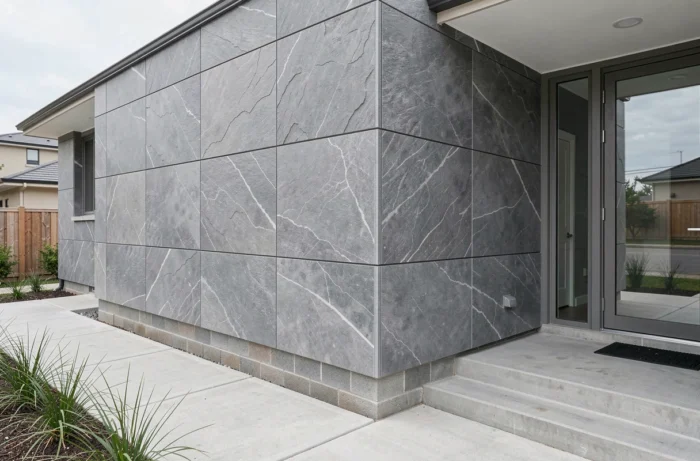
Composite panels replicate the appearance of wood or stone without their maintenance constraints. They resist UV, humidity, and require neither staining nor fungicidal treatment.
Installation is done on a framework of battens, similar to wooden cladding. The weight remains moderate, making it suitable for most standard concrete block walls. This is a relevant option when looking for a durable result with minimal maintenance.
7. Troweled lime plaster
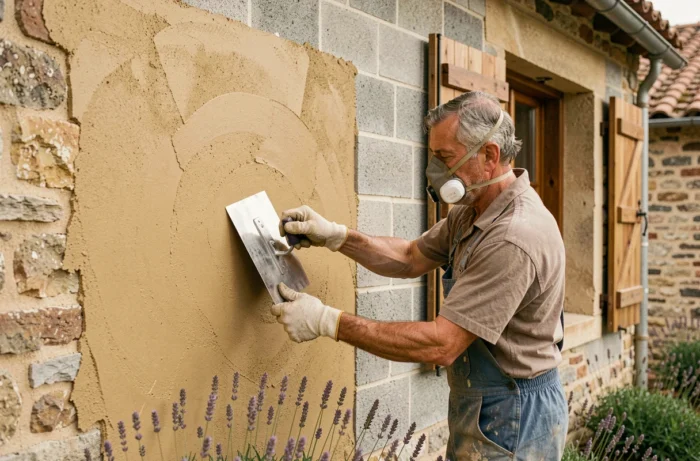
Lime plaster offers a matte, slightly irregular finish reminiscent of Mediterranean houses or old buildings. Unlike cement plaster, lime naturally regulates the humidity of the wall by allowing water vapor to pass through.
Application requires a bit more expertise: lime dries slowly and does not tolerate high heat during application. However, the result ages well and develops a patina over time instead of degrading.
8. Wooden screen or mashrabiya
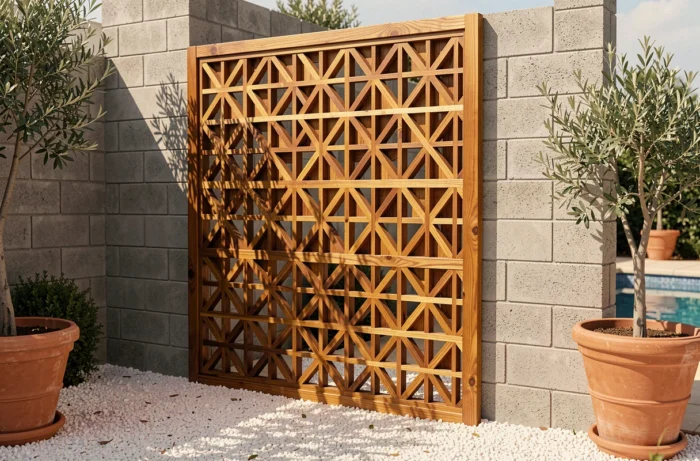
Rather than completely covering the wall, a wooden screen placed in front creates a play of shadows and light while masking the concrete block. The decorative effect is immediate. The openwork patterns add a contemporary or oriental touch depending on the chosen design.
The screen is fixed to posts anchored to the ground or wall. It does not touch the concrete block directly, simplifying installation and preserving the original wall. Remember to treat the wood with an outdoor saturator to prevent graying.
9. Wall planters and hanging pots
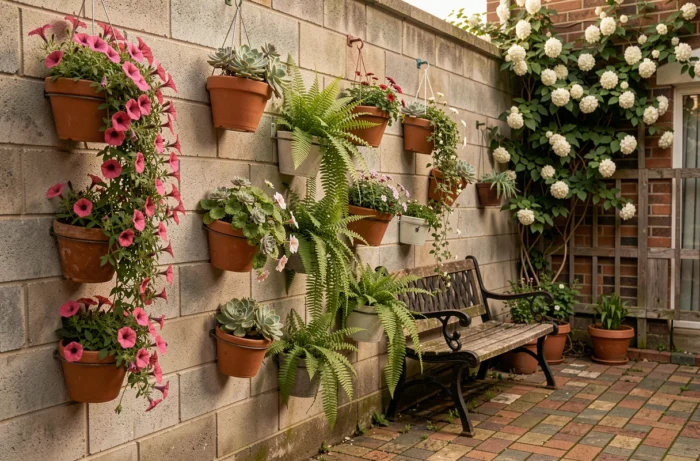
Planters fixed at different heights break the monotony of the concrete block without requiring major work. A few metal supports, terracotta or zinc pots, and the wall becomes an improvised vertical garden.
Here are the points to check before fixing planters to concrete blocks:
- Use anchors suitable for hollow concrete blocks (expansion or chemical anchors), as standard anchors do not hold in the cells
- Provide a drainage system to avoid water streaks on the wall
- Limit the total weight per fixing point to avoid weakening the block
10. Decorative gabion against the wall
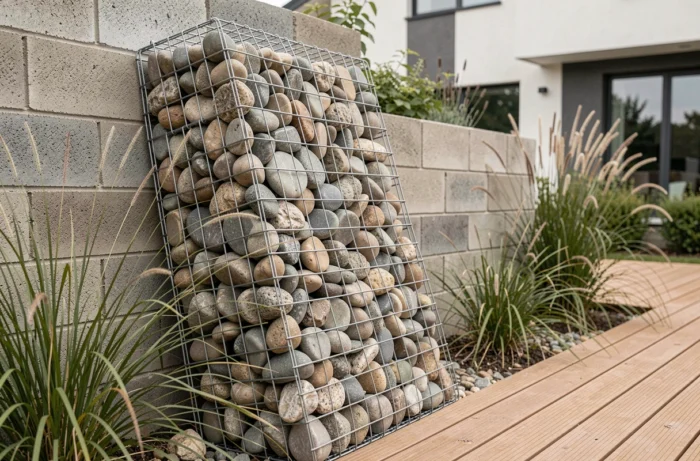
The gabion, a metal cage filled with stones, leans against the concrete block wall to create a massive and textured covering. The contrast between galvanized metal and pebbles or crushed stones gives a raw and structured appearance.
The gabion requires no fixation to the wall: its own weight keeps it in place. It simply needs to be placed on a stable and flat surface. This solution works particularly well for garden boundary walls, where it adds volume and a mineral character without intervention on the masonry.
Each technique meets a different budget, skill level, and aesthetic result. Before you start, check if your project requires a prior work declaration, especially for cladding, veneers, or any dressing that permanently alters the appearance of the facade from the public road. A thorough cleaning of the wall remains the common prerequisite for all these solutions.