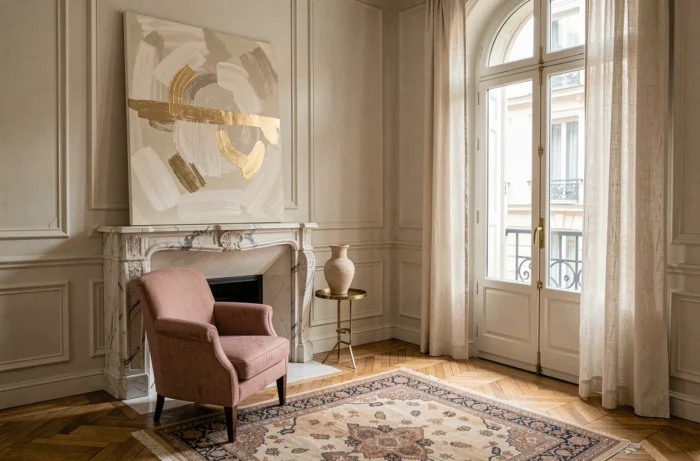
A white wall, a simple sofa, adequate natural light, and yet the room feels flat. We all know this situation: the space is clean, functional, but it lacks character. It is often the absence of a well-placed contemporary artwork that creates this void. French elegance in an interior does not rely on the accumulation of moldings or gilding, but on the ability to make a piece of art converse with the space that welcomes it.
Plan the placement of the artwork before choosing the furniture
We almost always do things the wrong way around. We furnish, we paint, we install the lighting, and then we look for a painting to “fill” a wall. The result is a static decor where contemporary art arrives last, like a visual bandage.
The French system of the 1% artistic, which requires certain public constructions to include a work of art from the design phase, offers a model that can be applied to private spaces. The idea is simple: integrate the artwork into the project from the layout plan. First, define the visual load-bearing wall of the living room or main room, then organize the sofa, lighting, and circulation around this focal point.
In practical terms, this changes the hierarchy of decisions. The choice of wall color, type of lighting, and even the height of the furniture depends on the artwork we wish to accommodate. A large abstract piece in muted tones does not require the same distance or light temperature as a metal sculpture placed on a pedestal.
By consulting decor inspiration on Maisonea, it quickly becomes clear that the most successful interiors share this common trait: art has not been added afterward; it structures the room.

Lighting and contemporary art: mistakes that ruin a piece
We invest in a canvas or a photograph by an artist, we hang it on the wall, and we illuminate it with the existing ceiling light. The result is dull, colors are distorted, and textures disappear. Lighting is the factor that most decor guides overlook, yet it conditions the perception of the artwork as much as the artwork itself.
Natural light and protection
Daylight remains the most flattering for most contemporary pieces. A north-facing living room offers constant, soft light, ideal for sensitive pigments. In contrast, a south or west exposure without UV filters degrades colors in a few years. Feedback on this point varies depending on the techniques used by the artist, but caution suggests installing filtering glass or a technical blind in front of the most exposed windows.
Appropriate artificial lighting
For the evening, a rail or adjustable spots positioned at 30 degrees to the wall avoid reflections on protective glass and shiny surfaces. A neutral color temperature is preferred over the overly amber warm white of ambient lamps, which alters the reading of cool tones.
- Recessed lights with a narrow beam are suitable for medium formats and highlight the textures of thick paint or collage.
- LED strips hidden behind a band at the top of the wall create a uniform wash of light, suitable for large photographic formats or screen prints.
- Adjustable floor lamps offer a mobile solution for renters who cannot drill into ceilings.
Insurance and inventory: protecting contemporary artworks at home
It is rarely mentioned in decor articles, but a work of art must be included in the inventory of the home and the home insurance policy. Most standard contracts cover ordinary furniture, not pieces with significant artistic value. Without a specific declaration, water damage or theft may only result in a negligible flat-rate compensation.
Artworks also benefit from an exemption from the real estate wealth tax (IFI). They remain outside the taxable base. To take advantage of this, one must be able to justify the nature of the object, hence the importance of keeping the purchase invoice, the certificate of authenticity, and a dated photograph.
For acquisitions exceeding a certain amount from a professional (gallery, dealer, intermediary), French anti-money laundering regulations require the seller to verify the buyer’s identity as soon as the transaction reaches the threshold of 10,000 euros. This is not an abstract constraint: you will be asked for an ID and sometimes proof of residence.
Choosing a contemporary artwork for a living room: concrete criteria
The choice of a piece of art is not limited to “I like it or I don’t.” One can love a canvas in a gallery and find it overwhelming once at home. A few technical parameters help filter before purchase.
- The relationship between the size of the artwork and that of the wall: a canvas that is too small on a large wall disappears, while one that is too large saturates the space. Generally, we aim for a piece that occupies between half and two-thirds of the width of the main piece of furniture placed below it.
- The color palette of the artwork should interact with the existing tones of the room without repeating them exactly. A controlled contrast (a touch of deep blue in a cream-toned living room) creates more visual tension than total harmony.
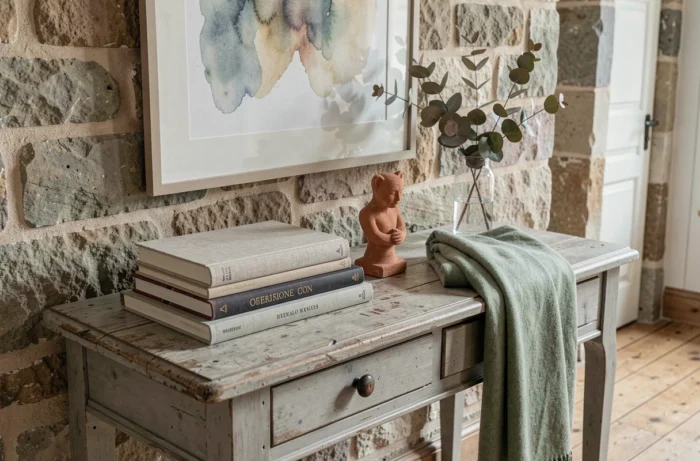
- The medium is as important as the subject. A photograph under glass, a textured oil painting, and a wall-mounted ceramic sculpture do not produce the same effect in the same space. The modern and the raw blend well in French interiors because they replay the dialogue between the old and the contemporary.
French elegance lies in this restraint: one strong piece per space, surrounded by calm. We resist the temptation to hang three artworks where one is sufficient, and we allow the wall to breathe around the frame.
Integrating contemporary art into one’s home involves practical as well as aesthetic choices. Placement, lighting, protection, and sizing condition the final result far more than style or current trends. A well-installed artwork in a simple living room transforms the atmosphere of an interior without touching the furniture or the walls. This may be the most honest definition of French decoration: doing a lot with little, as long as it is done well.