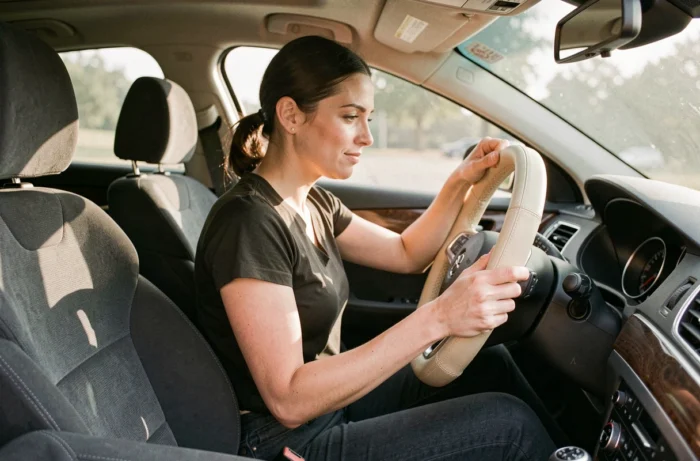
Customizing the interior of a vehicle is not limited to placing an air freshener on the rearview mirror. The term encompasses a range of interventions on materials, lighting, seating, and the digital interface of the cabin, with varying levels of complexity depending on whether one is replacing a carpet or modifying the number of seating positions.
Software Customization of the Cabin: What Changes with Connected Vehicles
Most guides focus on physical accessories. In recent years, an increasing share of customization has come through embedded software. Manufacturers developing Software-Defined Vehicles offer remote updates capable of modifying ambient lighting, the sound signature of the dashboard, or the comfort profiles of the seats.
Specifically, this means that an owner can change the hue of the ambient lighting, activate a specific sound mode, or adjust the firmness of the seat without disassembling anything. This trend is on the rise, with demand continuing to grow. The benefits are twofold: no mechanical intervention required, and the ability to revert to the original configuration before resale.
Before investing in an aftermarket LED kit or console cover, checking the available software options on the vehicle can sometimes yield comparable results, managed directly by the manufacturer’s system. Specialists like Prostyling Véhicule are indeed supporting this transition by combining physical accessories with integration into recent embedded systems.
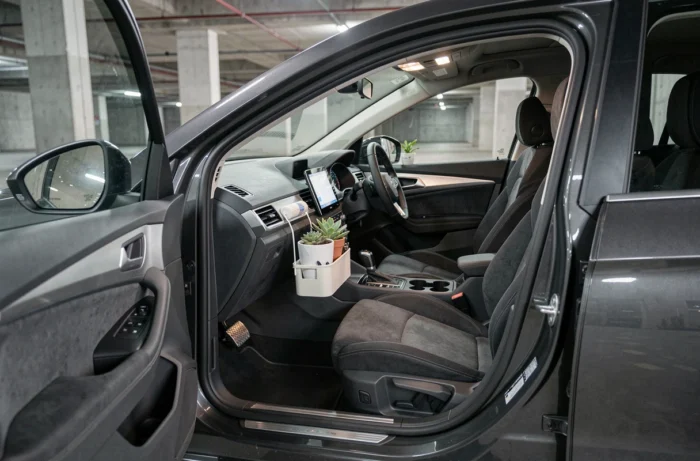
Materials and Coverings: Choosing Based on Actual Vehicle Use
The choice of an interior covering depends less on pure aesthetics than on daily use. A family vehicle transporting children and a dog does not require the same materials as a sedan used solely for business trips.
Seat Covers and Dashboard Trims
Leatherette covers resist wear well and are easy to clean, but they can get hot in summer. Technical fabrics with breathable mesh offer better thermal comfort, at the cost of more frequent maintenance. For the dashboard, adhesive films that mimic carbon or wood remain popular, provided one chooses a thermoformable product that conforms to curves without air bubbles.
An ill-suited covering will degrade within a few months. Before ordering, identifying friction areas (central armrest, seat sides, lower part of the steering wheel) helps target the surfaces that truly deserve treatment.
Custom Mats and Floor Protection
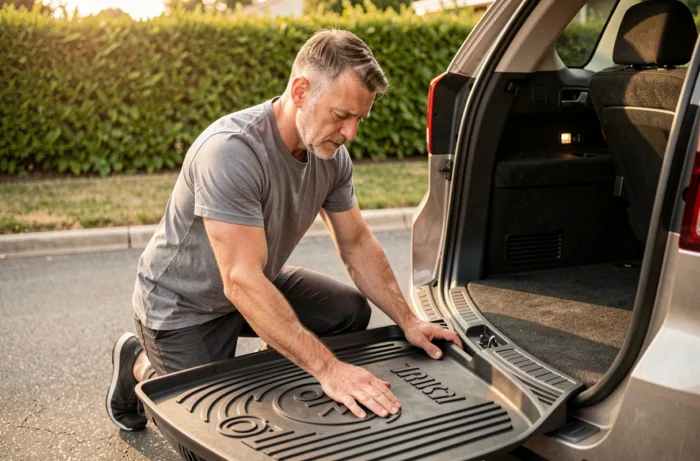
Custom-molded mats cover more area than universal mats and stay in place thanks to dedicated fasteners. In a vehicle used in rural areas or on construction sites, rubber trays with high edges protect the original carpet better than a textile mat, even a thick one.
LED Ambient Lighting: What Works and What Ages Poorly
LED ambient lighting is one of the most common modifications. RGB adhesive strips can be placed under the dashboard, along the doors, or under the seats, and are controlled via a mobile app or remote control.
The result heavily depends on the quality of the strip and its power supply. Cheap kits powered by the cigarette lighter often produce noticeable brightness variations when other equipment draws power. Connecting to the interior lighting circuit offers a more stable power supply, but requires some knowledge of automotive wiring.
- Monochrome LED strips (warm white or blue): discreet output, low consumption, long lifespan.
- RGB strips with Bluetooth controller: wide color choice, but fragile solder connectors are the first point of failure.
- Optical fibers around the dashboard: uniform light effect, more complex installation as the fiber must be routed behind the trims.
A often overlooked point: the color of the lighting interferes with night vision. Blue or cool white hues strain the eyes more than amber or dark red tones when driving at night.
French Regulations on Interior Modifications of a Vehicle
Interior customization may seem purely aesthetic, but some modifications fall under the regulations on notable transformations. Under French law, an interior modification that changes the number of seating positions, removes a row of seats, or transforms the vehicle into a utility vehicle or camper must undergo a separate approval process with the DREAL (Regional Directorate for the Environment, Planning and Housing).
This procedure involves a specific technical inspection and an update of the vehicle registration document. Failing to do so exposes one to a refusal during the technical inspection and, in the event of an accident, a challenge to coverage by the insurer.
- Replacement of covers, mats, ambient lighting, console trims: no declaration required as long as the original fasteners (seats, seat belts) are not modified.
- Removal or addition of a bench seat, modification of the number of seats: separate approval required.
- Transformation into a converted vehicle (bed, integrated kitchen): same procedure, with additional constraints on fire-retardant materials and ventilation.
Documenting each modification with photos and invoices facilitates both the technical inspection and the declaration to the insurer. Some companies require written notification as soon as a non-original equipment is permanently installed.
Visual Consistency of the Cabin: Avoiding the Catalog Effect
Accumulating accessories without a guiding theme often results in a messy outcome. Three simple principles help maintain visual consistency.
The first is to limit the color palette to two dominant shades, in line with the original upholstery. The second is to maintain a material unity: mixing glossy leatherette, matte carbon, and boucle fabric on three adjacent surfaces creates a contrast that strains the eyes.
The third concerns density: a customized cabin remains readable when each modified surface has a function. A steering wheel cover provides grip, a mat protects the floor, and lighting improves visibility. Placing an accessory that is purely decorative on the center console often hinders access to controls.
The most durable customization is one that withstands daily wear without requiring additional maintenance. Choosing fewer elements, but better suited to the vehicle and its use, yields a result that lasts over time and does not complicate either the technical inspection or resale.