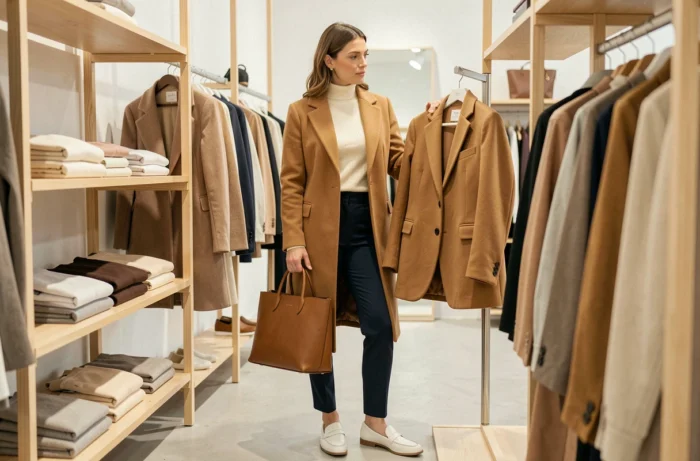
Finding a mid-season jacket that works just as well over jeans as it does over a dress, without looking like what we wore last year: this is the kind of concrete constraint that summarizes this year’s fashion trends. A stylish wardrobe in 2026 is not built by accumulating pieces, but by choosing those that absorb the new rules of the game, including regulatory ones.
Anti-fast fashion law and environmental labeling: what’s changing in fashion aisles
Since the enactment of law n°2026-602 on July 8, 2026, online retailers must clearly display the origin of manufacturing and integrate messages of sobriety, reuse, and repair. In practice, we are seeing mentions on product sheets that did not exist six months ago.
The European Union has also taken action. Since July 19, 2026, large companies can no longer destroy their unsold clothing, shoes, and accessories. The result: stocks are going towards resale, donation, or recycling, and brands are rethinking their production volumes.
On the environmental labeling side, the system remains voluntary in France but its framework is becoming clearer, with restrictions coming into effect on October 1, 2026. We are starting to see environmental scores on certain labels, similar to what already existed for household appliances. To keep up with these developments and identify pieces worth the investment, the fashion site Fashion Boobies regularly analyzes collections from this sustainability perspective.
This regulatory context is pushing brands to offer fewer references, but better documented ones. For us consumers, this means clearer choices and generally improved quality in mid-range pieces.
Trendy materials and colors for the autumn-winter 2026 season
There is a lot of talk about silhouettes, but the real daily choice criterion remains the material. Recycled textiles and traceable fibers are gaining ground in autumn-winter collections, driven by the regulatory pressure described above.
Which materials to prioritize this season
- Thick, raw denim, returning in more structured cuts than in 2025. A well-cut pair of rigid fabric jeans can be worn easily for six months without losing its shape.
- Ribbed knit in blended wool, ideal for layering. It can be found in high-neck sweaters or long cardigans, in muted colors.
- Brushed cotton for mid-season shirts, a compromise between summer lightness and the density of autumn fabric.
- Vegetable-tanned leather (or its documented synthetic alternatives), which several brands are adopting for accessories and short jackets.
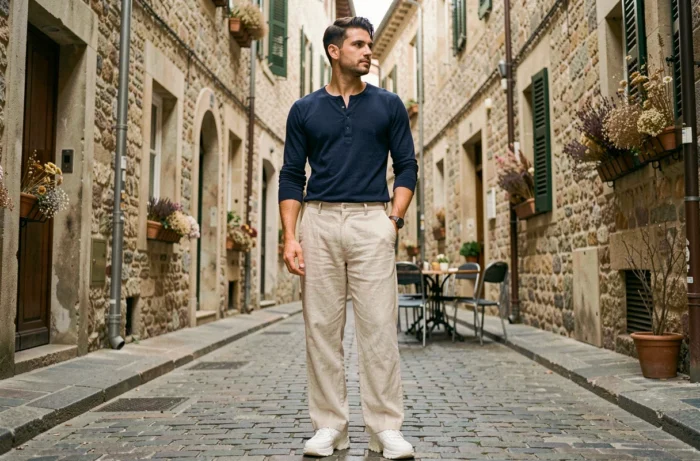
On the color side, purple makes a strong comeback this season, often described as a shade that is both mysterious and easy to pair. It is worn in touches (a bag, a scarf, a top) rather than as a total look. The basics remain black, navy blue, and sand beige, which serve as a neutral background to integrate seasonal colors without overhauling the entire wardrobe.
Key pieces to adopt for a versatile wardrobe
Rather than listing twenty items, we focus on three categories that cover most situations, from the office to the weekend.
The structured short jacket
The oversized blazer has dominated the last seasons. This year, cuts are tightening. A short, fitted jacket transforms a basic look into a polished outfit. Worn over raw jeans with a turtleneck, it works for the office. Over a midi dress, it effortlessly dresses up an outing.
The adaptable midi dress
The midi dress remains the most cited piece in style guides, and for good reason. Made from sufficiently dense fabric, it transitions from summer to autumn with a simple change of layer. Long-sleeved models with a V-neck can be worn alone in September, then under a coat from November onwards. Opting for a straight or slightly flared cut rather than a fitted one ensures better comfort throughout the day.
The high-waisted straight jeans
The skinny jeans are fading, the baggy style is tiring: the straight jeans find a balance that most body types can adopt without alteration. In raw or medium blue, they pair well with short jackets, oversized sweaters, or tucked-in shirts. It’s the foundational piece of the wardrobe, one that you wear three times a week without thinking.
Prints and accessories: balancing without overloading the look
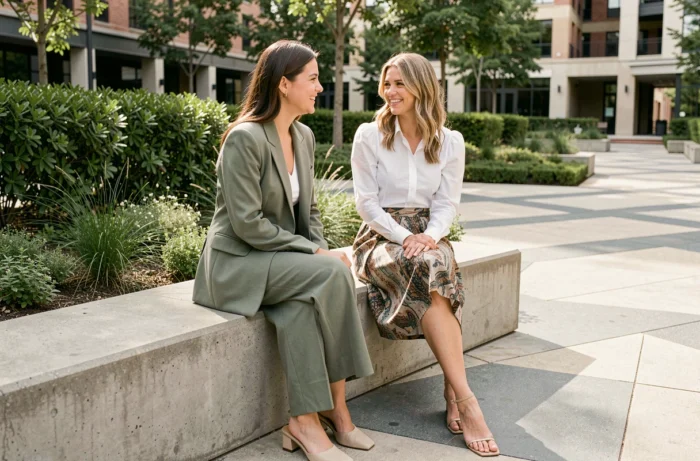
This season’s prints oscillate between subtle geometric patterns and dark florals on a black background. The working rule is: one print per outfit, paired with solid pieces. A patterned pant with a neutral top. Or the reverse. Never both at the same time, unless you master color combinations perfectly.
For accessories, opinions vary on this point, but the dominant trend leans towards visible and few pieces. A medium-sized structured bag replaces the micro-bag and the giant tote. A wide belt worn over a coat marks the waist without adding a layer. Thick gold chain jewelry remains present, as long as it is not stacked.
- A silk or twill scarf tied to the bag or wrist, rather than around the neck, to avoid looking too classic.
- Square-toed ankle boots that elongate the silhouette under straight pants.
- A wide-faced watch, the only jewelry on the wrist, for a clean and readable style.
The stylish wardrobe of 2026 ultimately consists of just a few pieces. Three to five well-chosen basics cover most situations, provided you focus on durable materials and cuts that do not depend on a micro-trend. The regulatory framework is also pushing in this direction: fewer impulsive purchases, more traceability, and clothing designed to last beyond a season.