Choosing a women’s magazine in 2025 means navigating an offering that has changed significantly in just a few years. Historical titles coexist with independent publications, print endures against digital, and editorial lines have expanded well beyond fashion and beauty. This comparison sets out concrete criteria to identify the women’s magazines that deserve your reading time, whether it’s a monthly on newsstands or a digital subscription.
Editorial Quality and Content-Price Ratio of Women’s Magazines
Before comparing titles one by one, one observation stands out: the price per issue says nothing about the density of the content. A five-euro monthly filled with advertorials offers less value than a more expensive quarterly magazine without disguised advertising.
To evaluate a women’s magazine, three criteria work well together. The ratio of editorial pages to advertising pages provides a first indication. The diversity of contributors (in-house journalists, guest experts, opinion pieces) reflects the editorial ambition. And the consistency of treatment, meaning the ability to delve into a topic over several pages rather than just skim it, distinguishes solid titles from quick-flip magazines.
A detailed comparison of the main women’s press titles is available on the Valimero Fashion Addict website, with reading grids by theme and format.
Monthly or Weekly Women’s Magazine: What the Rhythm Changes
Have you noticed that a weekly like Femme Actuelle and a monthly like Marie Claire are read in completely different ways? The format shapes the content as much as the editorial line.
A weekly magazine prioritizes current events and short formats. Recipes, cultural agendas, health news: the information is tailored for quick reading, often in a single sitting. It’s the ideal format for those who want a regular appointment without accumulating unread issues.
The monthly offers more space for in-depth features. Marie Claire, for example, regularly dedicates long formats to societal topics. Cosmopolitan opts for a more direct tone, focused on daily life and sexuality. The difference in rhythm also allows monthlies to work with more polished visuals and more ambitious layouts.
The quarterly, on the other hand, is closer to a book. La Déferlante, a feminist magazine launched in recent years, publishes long investigations and essays. Its readership seeks analysis rather than current events.
- Weekly (Femme Actuelle, Grazia): quick reading, practical content updated each week, moderate price per issue
- Monthly (Elle, Marie Claire, Cosmopolitan, Biba): more substantial features, in-depth fashion and culture sections, a good compromise between regularity and density
- Quarterly or Biannual (La Déferlante, independent magazines): long investigations, engaged perspective, less advertising, higher unit price
Paper Subscription or Digital Reading: Which Access to Choose
The market for women’s magazines is increasingly leaning towards multi-platform subscriptions. Most major titles now offer a combined paper and digital formula, sometimes at the same price as the paper-only option.
The digital subscription suits readers who travel or lack space. Online kiosks like KiosqueMag or Viapresse aggregate offers and allow for price comparisons. Access is usually via a dedicated app, with offline reading available.
Print retains an advantage that digital cannot replicate: the browsing experience. Discovering a section by chance, returning to a dog-eared page, leaving an issue on the coffee table—all of this is part of the experience. For a highly visual magazine like Elle or Vogue, the print format remains more enjoyable.
One point to check before subscribing: some digital subscriptions provide access to back issues, which multiplies the value of the offer. Others are limited to the current issue.
Specialized Women’s Magazines: Health, Culture, and Fashion in Depth
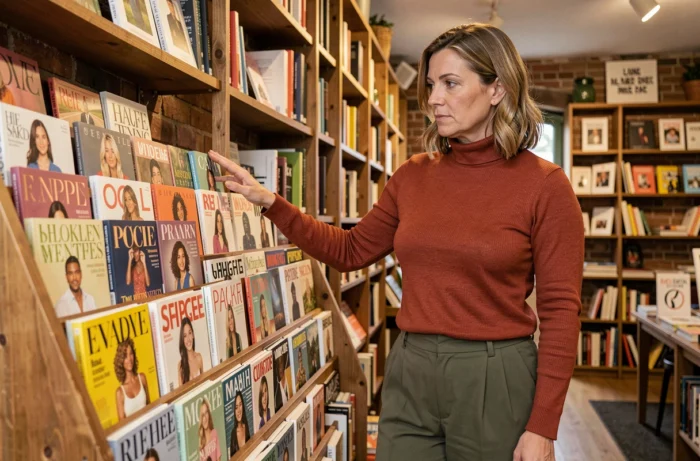
Classic comparisons often lump all women’s magazines together. The editorial reality of 2025 shows the opposite: titles are specializing.
Santé Magazine deals with wellness and prevention with a rigor that generalist health sections do not reach. Marie France targets a more mature readership with practical life, heritage, and travel topics. Avantages positions itself on smart deals, balancing accessible fashion and daily tips.
- Fashion and Trends: Elle, Cosmopolitan, Grazia for ready-to-wear, Vogue for haute couture and photo editorials
- Health and Wellness: Santé Magazine, Pleine Vie for a more generalist angle aimed at active seniors
- Engagement and Society: La Déferlante for a feminist angle, Marie Claire for in-depth reports
- Daily Life and Budget: Femme Actuelle, Avantages, Nous Deux for fiction and entertainment
Why does this diversification matter? Because a generalist women’s magazine cannot delve into every topic. Combining a generalist monthly with a specialized title provides richer coverage than a single subscription, often for a comparable total budget.
English-language titles (Vogue UK, Harper’s Bazaar) also complement the offering for readers comfortable in English. Their fashion and lifestyle content is often more attuned to international trends, even if the cultural prism remains different.
The best women’s magazine in 2025 does not exist as a single title. The choice depends on what you are looking for: a light read every week, an in-depth feature every month, or an engaged magazine a few times a year. Cross-referencing your desired reading frequency, available budget, and priority themes remains the most reliable method to avoid piling up unread issues.