A sofa that sticks to your legs in summer, an off-white wall that turns yellow under poorly chosen LED lighting, a shelf cluttered with knick-knacks that are no longer looked at: interior decoration often revolves around concrete irritants before it becomes a matter of style. Elevating your home starts with identifying what doesn’t work in daily life, then grafting the right trends in the right places.
Floors and coverings: terrazzo and natural fibers change daily maintenance
Natural materials have been talked about for years, but the novelty lies in their application to flooring. Thick carpets are giving way to light and breathable floors: plant fibers, LVT (luxury vinyl tiles), or terrazzo updated with finer aggregates and soft shades. The gain is both aesthetic and practical.
Terrazzo, once thought to be reserved for 1970s building lobbies, is making a comeback with finer aggregates and soft hues. Its main advantage: minimal maintenance and durability that surpasses classic tiles. Just vacuum, give it a mop, and you’re done.
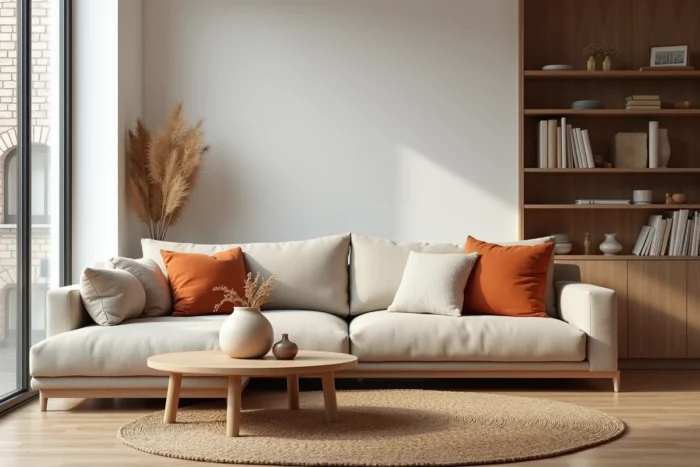
Natural fibers (jute, sisal, coconut) work well in dry rooms. For a living room or bedroom, they add texture to the floor without accumulating dust mites like a long-pile carpet. In a properly ventilated interior, these fibers last for several years without deteriorating.
You can find ideas for floor and furniture arrangements by browsing the home and decor sections on La Règle du Je, which compile concrete approaches room by room.
Color palette 2026: applying the 60-30-10 rule without mistakes
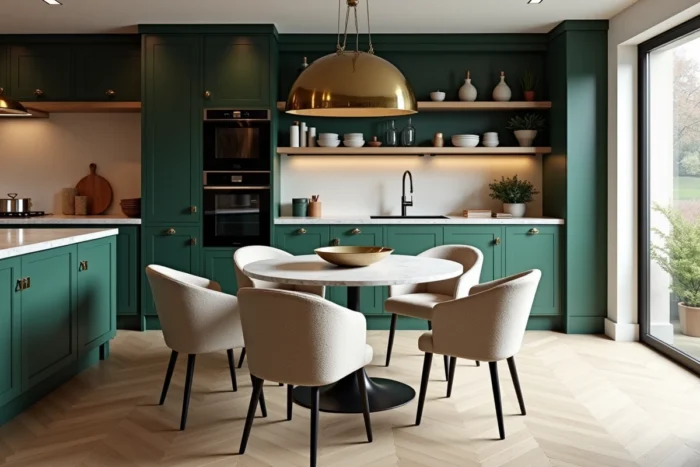
Trendy palettes converge towards natural shades: bright whites, deep blue-greens, soft earth tones like terracotta. Pantone, WGSN, and Coloro all point in this direction. Placing these colors randomly on the walls does not produce anything coherent. The method that truly structures an interior is the 60-30-10 rule applied to each room.
How to concretely distribute the shades
- 60% of the visual surface receives the dominant color (walls, ceiling, large rug): choose a neutral or soft tone, one that you can live with over time
- 30% goes to the secondary color (curtains, armchairs, bedding): this is where you can dare a blue-green or terracotta without saturating the space
- 10% for the accent color (cushions, vases, frames, lighting): a bold or contrasting shade that draws the eye and adds character
This breakdown prevents the room from tipping into bland monochrome or, conversely, into a color overload. A living room with warm white walls, a terracotta linen sofa, and two blue-green cushions works immediately.
Testing colors directly on a wall before painting the entire room remains the most useful reflex. The natural morning light and the artificial evening lighting do not render the same shade. A paint sample placed on the wall for two days avoids unpleasant surprises.
Sensory decoration: going beyond the visual in the living room and bedroom
The most underestimated trend concerns multi-sensory design. We no longer decorate just for the eyes. The textures we touch, the acoustics of a room, the scents that settle in contribute as much to the ambiance as the color of the walls.
In a living room, a corduroy sofa does not offer the same experience as a cotton canvas model. The choice of textiles determines real comfort, not just appearance. Crumpled linen for curtains filters light differently than synthetic sheers, and it regulates ambient humidity better.
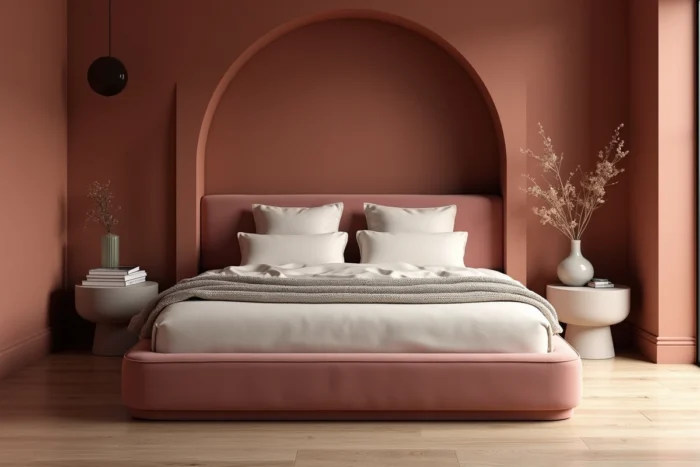
In the bedroom, acoustics matter more than one might think. A cork panel wall behind the headboard absorbs sound and adds a warm material without resorting to a tufted headboard. On the olfactory side, artisanal candles made from vegetable wax diffuse without chemical residue, whereas spray air fresheners quickly saturate a small space.
Characterful objects and upcycling in interior decoration
The vintage wicker basket, long relegated to flea markets, is asserting itself as a full-fledged decorative object. Large-scale upcycling redefines what we consider noble furniture. A thrifted dresser, sanded and waxed, brings a patina that no industrial piece can replicate.
The idea is not to accumulate vintage items by principle, but to select one or two strong pieces per space. A brass barber mirror in the entryway, a raw metal workshop stool in the kitchen. These objects create a focal point without cluttering.
Multifunctional rooms and micro-spaces: adapting decor to real uses
Remote work and the reduction of living spaces have transformed how we arrange our homes. A workspace in the living room, a storage area under a staircase, a guest room that also serves as a dressing room: decor must follow these constraints, not ignore them.
A modular piece of furniture is better than two fixed pieces in a space of less than 30 m². Extendable tables, foldable desks, and stackable seating allow you to reconfigure a room in minutes. This flexibility takes precedence over pure style.
Closed storage (low sideboards, built-in cabinets) is making a strong comeback against open shelves that require impeccable organization at all times. For a living room, a low sideboard with doors hides everyday clutter while serving as a support for a few chosen decorative objects.
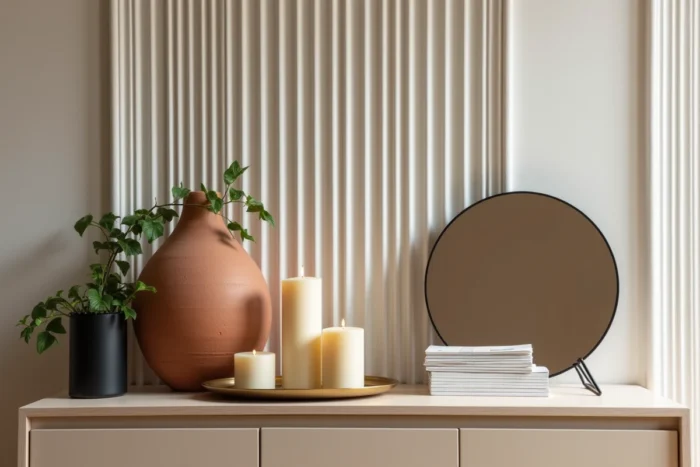
Durable decor trends are those that can be adapted to one’s own constraints of space, light, and use. Applying a color while respecting a ratio, choosing a floor for its ease of maintenance as much as for its look, integrating a thrifted object that tells a story: it is this accumulation of concrete decisions that transforms an interior, not a radical style change applied all at once.