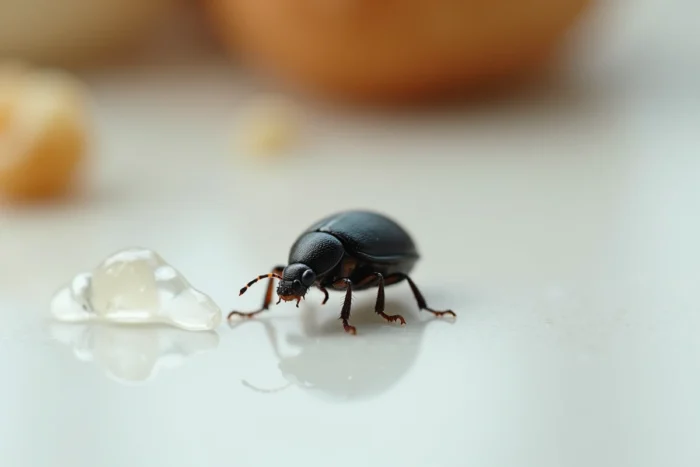
A black dot moving on the windowsill, another crushed against the kitchen baseboard. Before pulling out the vacuum cleaner or an insecticide spray, it’s worth observing for thirty more seconds. The shape of the body, the size, and especially the room where the insect is located guide the diagnosis towards a specific species, and importantly, towards the appropriate level of response.
Three visual criteria to identify a black insect in under a minute
In the field, confusion between species almost always comes from the same reflex: we look at the color, see “small and black,” and stop there. Three additional details change everything.
The first criterion is the silhouette. A perfectly oval and bulging body, the size of a pinhead, points towards a carpet beetle or a dermestid. A more elongated body with a rostrum (a sort of small pointed beak at the front) indicates a weevil. A flattened body with long, thin antennae suggests a juvenile cockroach.
The second criterion is mobility. Adult carpet beetles walk slowly and head towards the light, often sticking to the glass. Weevils move deep in a food cupboard, rarely out in the open. Springtails, tiny and round, jump when disturbed, which immediately distinguishes them from everything else.
The third criterion is the room. To reliably identify a small round black insect, we cross its morphology with the exact location of the discovery: bathroom, kitchen, bedroom, or windowsill. This location-form crossover provides a much more reliable quick diagnosis than color alone.
- Window or light source: adult carpet beetle or dermestid, attracted by light to reproduce outside.
- Food cupboards, bags of rice or flour: weevil, recognizable by its rostrum and short legs.
- Bathroom, basement, damp areas: springtails (jump) or pillbugs (segmented shell, curl into a ball).
- Bedroom, sofa, stored textiles: carpet beetle larva (hairy, brown-black) or larder beetle.
Isolated insect or established infestation: signals that change the response
An adult carpet beetle resting on a curtain does not warrant treatment. These insects enter through open windows in spring and summer, lay eggs, and then die. The problem does not come from the visible adult but from what we cannot see: the larvae.
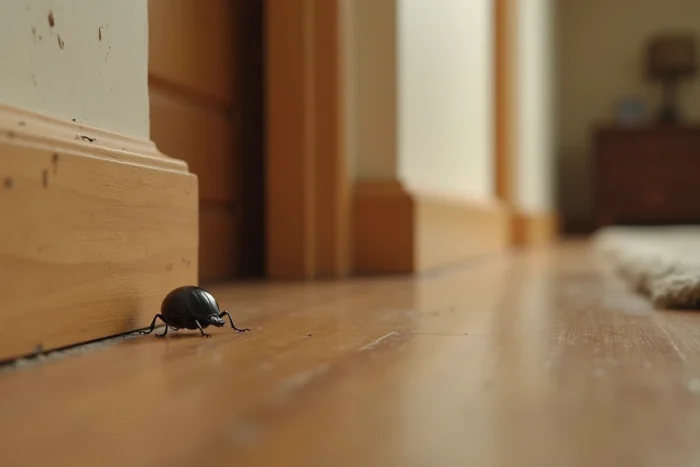
Multiple individuals in the same place signal active reproduction. We move from an accidental visitor to an established colony when we spot at least two of these signs: translucent shed skins along the baseboards, small hairy larvae in textile corners, or regular holes in wool or silk fabric.
For weevils, the alert signal is the presence of small holes in grains of rice, pasta, or cereals. A single weevil on the countertop may come from a contaminated package at purchase. Several dozen in a cupboard indicate that laying has occurred in the stored goods for some time.
The case of cockroaches is different. Even a single juvenile black cockroach in the kitchen deserves serious inspection. German cockroaches are gregarious and nocturnal: spotting one in broad daylight may indicate a already dense population, hidden behind appliances or under the sink.
Larder beetle: the round black insect that no one suspects
Articles on household insects rarely mention the larder beetle, and this is a blind spot. This round black beetle measures a few millimeters. It is easily confused with a carpet beetle, but its behavior differs.
The larder beetle settles near sources of animal protein: pantry, dried food scraps, pet food, sometimes even collections of preserved insects or tanned skins. Its larvae, brown and hairy, can also attack textiles, adding to the confusion with the carpet beetle.
The discovery location distinguishes between the two. A round black insect found near a window, on a curtain, or in a clothing cabinet points towards a carpet beetle. The same insect found in a food cupboard, near pet food or in a cellar points more towards a dermestid.
Responses vary when the insect appears in a mixed room like a laundry room. In this case, observing the larvae remains the most reliable way to distinguish.
Concrete actions based on the identified insect
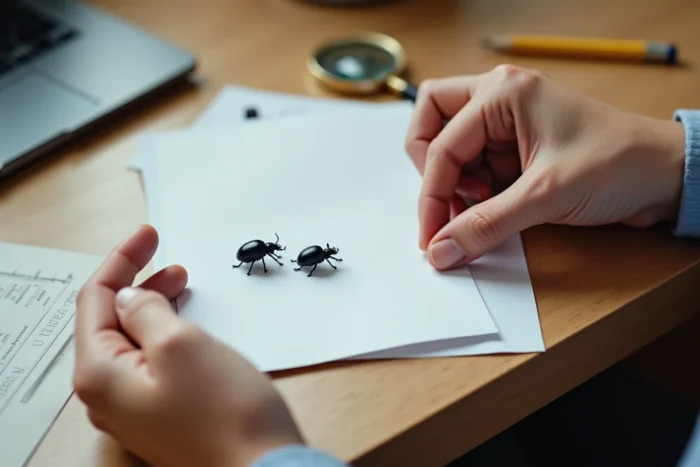
Once the species is determined, the response is calibrated. For carpet beetles, vacuuming baseboards and under furniture eliminates larvae and shed skins without chemicals. Affected textiles should be washed at 60 °C, or placed in the freezer for at least 72 hours for delicate items like silk or fine wool.
For weevils, all opened packages from the contaminated cupboard should be discarded, shelves cleaned with white vinegar, and dry goods transferred to airtight containers. The problem disappears in a few days if the source is cut off.
Springtails and pillbugs signal excess moisture. Ventilating the bathroom, fixing a leak, or installing a dehumidifier addresses the problem at the source. Killing visible individuals without correcting the humidity is pointless: they will return.
For cockroaches, insecticide gel in a syringe remains the most targeted method indoors. Gel points should be placed behind appliances, under the sink, and along pathways. If the population is dense, calling in a professional prevents recontamination from neighboring units.
The reflex to spray a broad-spectrum insecticide throughout the room is counterproductive in most cases. It disperses the insects without reaching the hidden larvae and degrades indoor air quality for a temporary result. Identify the species first, treat the cause next: this is the only protocol that lasts over time.